
The Mountain’s Final Say
The ClimbThis flow develops the book’s recurring idea that human plans and expertise remain subordinate to weather, altitude, and terrain.
increasing Bearing strength in each event
 decreasing
Bearing strength in each eventdecreasingA Forecasting Problem
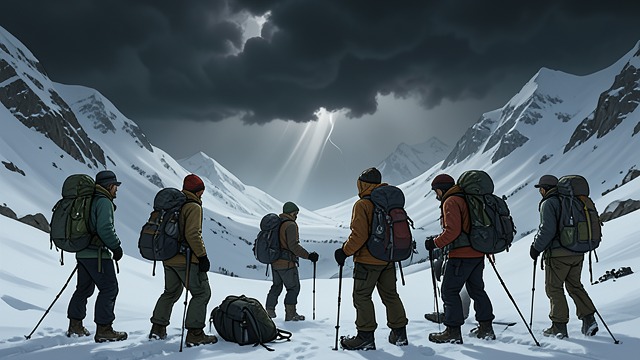
A Forecasting Problem
Unsettled Conditions
Snow persists on the approach, delaying supplies and disrupting the opening schedule.
Early Reminder
The weather begins shaping the expedition before the climbers reach high altitude, demonstrating that logistics are already subject to the mountain’s conditions.
A Brief Weather Window
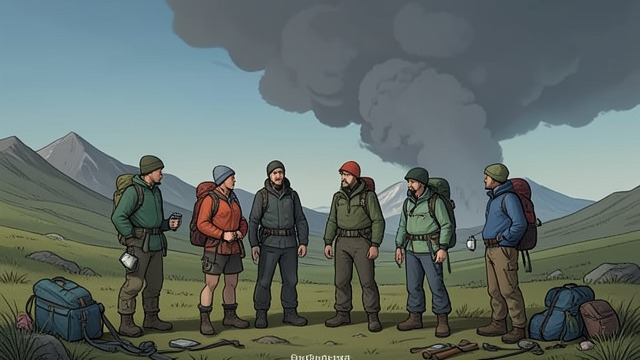
A Brief Weather Window
Calm After Wind
A lull encourages the teams to begin their ascent after a night of severe winds.
Misreading Stability
The absence of immediate danger is mistaken by some as evidence that conditions will hold through the descent.
Clouds at the Summit
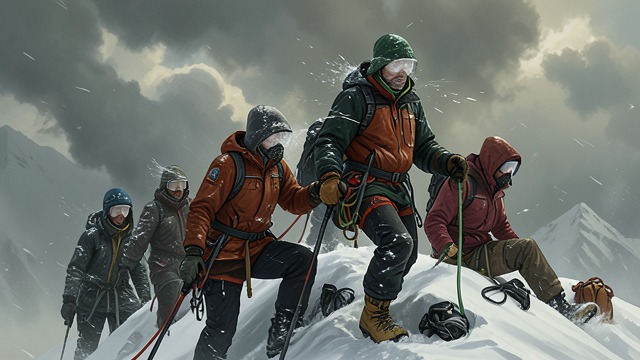
Clouds at the Summit
Changing Signs
Wind rises and clouds gather while climbers continue to arrive at the summit.
Human Delay
The mountain does not force an immediate choice; instead, climbers must recognize that each delay narrows the safe return window.
Storm Without Orientation
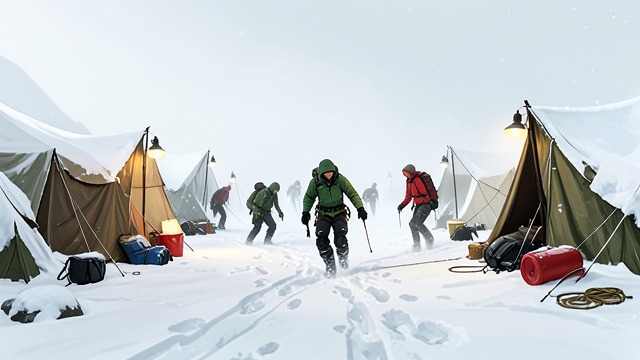
Storm Without Orientation
Terrain Erased
Snow and wind remove visibility, hide camp lights, and turn familiar ground into a dangerous blank.
Limits Exposed
Experience, oxygen, and courage matter, but none can make a climber see through a whiteout or control the storm.
The Unmoved Mountain
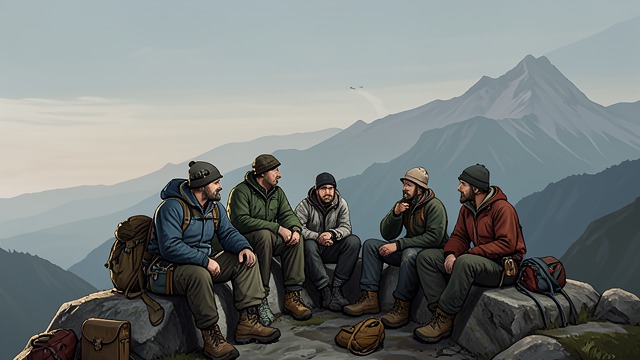
The Unmoved Mountain
Human Interpretation
Survivors and writers debate responsibility, but the mountain itself has no intention and offers no judgment.
Final Authority
The account returns to the idea that nature does not negotiate with ambition; climbers must adapt to conditions they cannot command.
March 1996 in the Himalaya
May 9–10, 1996
May 10, 1996, afternoon
night of May 10, 1996
after the 1996 disaster
